
Are Log Burners Being Banned? UK Rules and Smoke Control Areas Explained
Every winter the headlines come round again, and every winter we get asked the same thing on sweeps around Essex, Hertfordshire and North and East London: are they banning log burners? The short answer is no. But there are real rules on what you can burn and where, and some of them have teeth. Here is where things stand in England right now, and what you actually need to do.
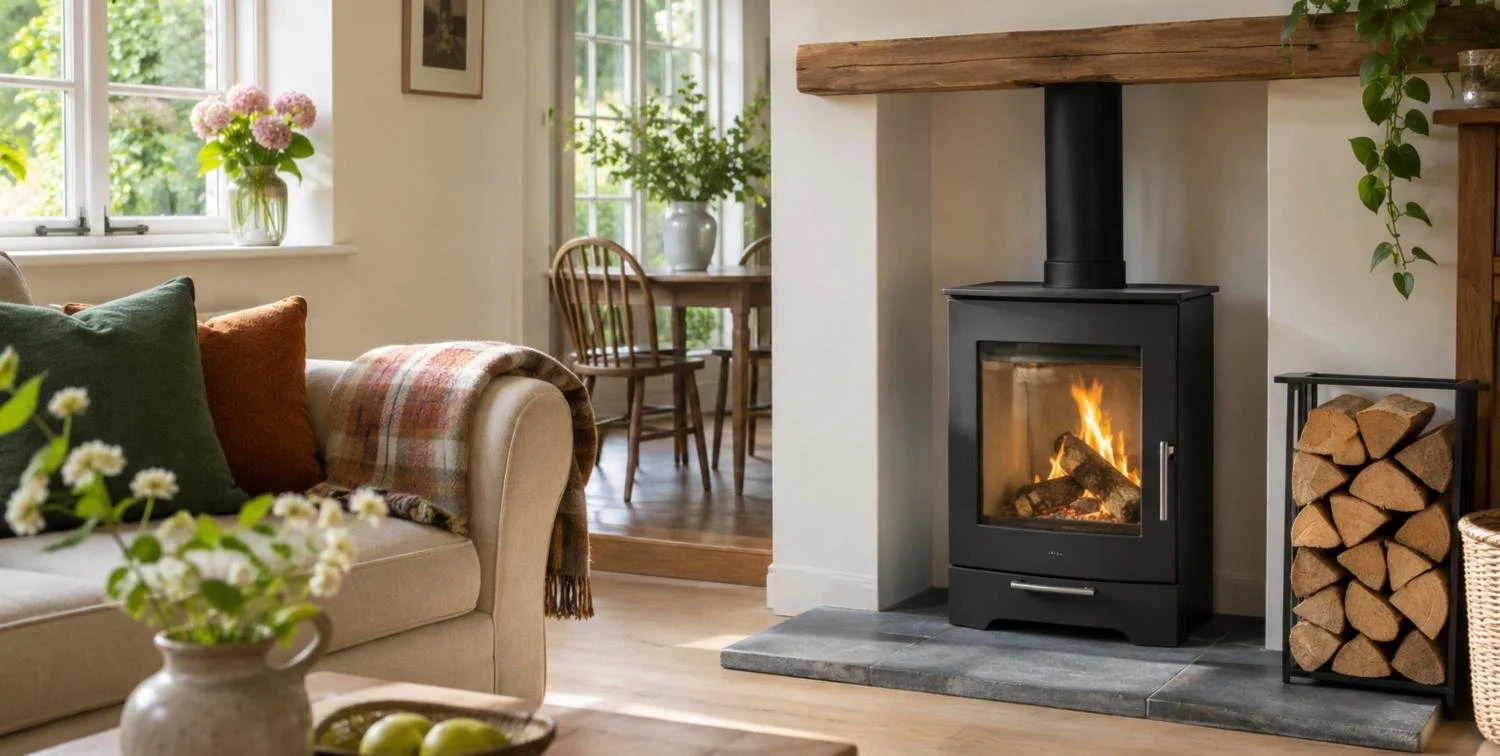
No, log burners are not being banned in England. You can still own, fit and use one. What the law controls is the fuel you burn, the smoke your chimney gives off in a smoke control area, and the standard new stoves must meet. In a smoke control area you need either a Defra exempt stove or an authorised smokeless fuel, and councils can issue penalties of up to £300 for smoke from your chimney. Government proposals published in January 2026 target new stoves, not the ones already in people's homes.
So where did the ban story come from?
Wood burning is a big source of fine particle pollution, known as PM2.5. Defra's own figures put domestic burning of solid fuels at around 20% of UK PM2.5 emissions in 2023, roughly the same as road transport. That figure, plus a tougher PM2.5 target in the government's Environmental Improvement Plan, means wood burners keep coming up whenever air quality is in the news.
A lot of the coverage mixes up three different things: the rules that already apply, proposals that are being looked at, and ideas from campaigners. Only the first one affects you today. We will go through each in turn.
The log burner regulations that already apply in England
None of these are new, but plenty of stove owners have never been told about them.
- Wet wood sales. Since 1 May 2021, under the Air Quality (Domestic Solid Fuels Standards) (England) Regulations 2020, wood sold in units under 2m³ must have a moisture content of 20% or less. That is why bags and nets of logs now carry the Ready to Burn label. Larger loads can still be sold wet, but must come with advice on drying them.
- House coal sales. Bagged traditional house coal could no longer be sold from 1 May 2021, and the loose house coal that merchants delivered was phased out after that. Manufactured smokeless fuels must be low sulphur and low smoke.
- Ecodesign for new stoves. Stoves placed on the market in Great Britain from January 2022 have to meet the Ecodesign standard, which sets limits on smoke, particulates and other emissions, plus a minimum efficiency. It applies to stoves being sold, not to stoves already fitted.
- Smoke control areas. In a smoke control area it is an offence to let smoke come from your chimney unless you are burning an authorised fuel or using an exempt appliance. Changes brought in by the Environment Act 2021 let councils deal with this through civil penalties of up to £300, rather than going straight to court.
- Buying the wrong fuel. GOV.UK says you can be fined up to £1,000 for buying unauthorised fuel to use in an appliance that is not Defra approved, if you live in a smoke control area.
The coal rules catch a lot of people out, especially anyone with a multi fuel stove. Our guide can you burn coal in a log burner? goes through what you can and cannot buy now.
What is a smoke control area?
A smoke control area is a part of a council's patch where there are limits on chimney smoke. They were brought in under the Clean Air Acts, and many towns and cities have had them for decades. If your home is in one, you have two legal options for a stove:
- Burn an authorised fuel. These are smokeless fuels on the government's authorised list, such as anthracite and approved manufactured smokeless fuels. Logs are not an authorised fuel.
- Use an exempt appliance. A Defra exempt stove, sometimes called a Defra approved wood burner or smoke exempt stove, has been tested to burn wood without giving off too much smoke. You can burn logs in it, but only the fuels the manufacturer lists for it, and only used the way the manual says.
It is the stove that is exempt, not you. An exempt stove run with wet wood or the air shut right down can still smoke, and smoke is what the council looks at.
Smoke control areas in London, Essex and Hertfordshire
Much of North and East London is covered. Enfield Council says the whole of the borough is a smoke control area. Waltham Forest currently has more than 30 separate smoke control zones, and in December 2025 councillors approved plans to merge them into one order covering the whole borough, including house boats on its waterways. If you live in any London borough, assume you are in one until your council tells you otherwise. Our East London and North London sweeps cover a lot of homes in exactly this position.
Essex and Hertfordshire are more patchy. Some towns have smoke control areas covering certain streets or estates and others have none, and the boundaries do not always follow what you would expect. Do not guess. Check your own council's website, or Defra's online smoke control area map, and if in doubt ring the council's environmental health team with your address.
Log burner rules at a glance
| Your situation | What the rules say | What to do |
|---|---|---|
| Not in a smoke control area | You can burn wood or other suitable fuels, but bagged logs under 2m³ must be sold dry and house coal can no longer be sold | Buy Ready to Burn logs or season your own, and sweep regularly |
| In a smoke control area with a Defra exempt stove | You can burn the fuels the manufacturer lists, such as wood, as long as you use it as instructed | Use dry logs, follow the manual and keep the paperwork that shows it is exempt |
| In a smoke control area with a stove that is not exempt | You may only burn authorised smokeless fuels. Smoke from the chimney can mean a penalty of up to £300 | Switch to an authorised fuel the stove is built for, or look at an exempt stove |
| Wood-only stove in a smoke control area, not exempt | Logs are not an authorised fuel, and you cannot put smokeless fuel in a stove with no grate | Talk to a HETAS installer about an exempt replacement before burning |
| Buying a new stove | New stoves must meet Ecodesign. Exemption for smoke control areas is a separate listing | Check it is Ecodesign and Defra exempt, and get it fitted by a HETAS registered installer |
| Older stove already fitted | No current law makes you remove or replace it | Get it swept and serviced, and check it is still safe to use |
Are log burners going to be banned in future?
This is the bit where the headlines run ahead of the facts, so here is what has actually happened.
The Environmental Improvement Plan, published by the government in late 2025, named domestic burning as one of the areas it wants to tackle to cut PM2.5. Following that, Defra and the devolved governments ran a consultation on solid fuel burning from 22 January to 19 March 2026. It proposed three main things:
- Tougher smoke limits for new stoves. The current limit is 5g of smoke per hour, plus a small allowance for bigger stoves, and the proposal is to bring that down to 1g per hour, coming in three to five years after any new law is made.
- Labels on new stoves and fuels showing an emissions rating, the permitted fuels and a health warning.
- Bigger penalties for fuel suppliers who break the fuel rules, raising the current £300 fixed penalty to as much as £2,000.
The consultation document is clear that stoves already installed would not be affected by the new limits or labels, and that there would be no need to retest them. It also did not propose changing the smoke control area rules in England. So when you see a £2,000 figure in the papers, that is about fuel sellers, not people burning logs at home.
As we write this in November 2026, these are still proposals. Nothing from the consultation has become law yet, and the details could change before it does. If the rules do change, we will update this guide.
Scotland and Wales have their own rules. Everything in this guide is about England, which is where all of our customers are. If you have a holiday home elsewhere in the UK, check the rules there separately.
What to do if you have a log burner
You do not need to panic or rip anything out. You do need to make sure you are on the right side of the rules that already exist. This is the order we would go in.
Check if you are in a smoke control area
Look up your address on your council's website or Defra's map. If you are in London, the answer is very likely yes.
Find out what your stove is
Check the manual or the data plate for the make and model, then see if it is listed as Defra exempt and which fuels it is approved for.
Burn the right fuel
In a smoke control area that means an authorised smokeless fuel, unless the stove is exempt. Everywhere else, only burn what the manual lists.
Keep your logs dry
Burn wood under 20% moisture. Use Ready to Burn logs, or properly seasoned wood checked with a moisture meter. Our guide to the best wood for a log burner covers the details.
Get the chimney swept
A clean flue draws better and burns cleaner. See how often you should sweep for your fuel and how much you burn.
Have the stove serviced
Worn rope seals and a warped baffle make a stove harder to control and more likely to smoke. A stove service sorts that out.
Quick checklist for stove owners
- I know whether my home is in a smoke control area.
- I know the make and model of my stove, and whether it is Defra exempt.
- I only burn fuels listed in the manual, and authorised fuels if my stove is not exempt.
- My logs are under 20% moisture, and I never burn painted, treated or pallet wood.
- I do not shut the air right down overnight to keep the fire in, which makes it smoke.
- The chimney has been swept and I have a sweep certificate to show for it.
- There is a working carbon monoxide alarm in the room with the stove.
Thinking of buying a new stove?
Any new stove you buy should already meet Ecodesign. If you are in a smoke control area, or might move to one, check it is also Defra exempt, because the two are not the same thing. If you want the choice of logs and smokeless fuel, read our comparison of a multi fuel stove vs a wood burner first. And get it fitted by a HETAS registered installer, so the work is signed off under Building Regulations.
Not sure what your stove is or whether it is set up right for where you live? Ask us when we come out to sweep. We look at plenty of stoves every week and are always happy to take a look.
Common questions
Are log burners being banned in the UK?
No. There is no ban on owning or using a log burner in England. The rules control which fuels can be sold, what you can burn in a smoke control area and the standard new stoves must meet. Proposals consulted on in 2026 would tighten limits for new stoves but would not affect stoves already in homes.
Can I be fined for using my log burner?
Only if you break the rules. In a smoke control area, councils can issue a penalty of up to £300 if your chimney gives off smoke and you are not using an authorised fuel or an exempt stove. GOV.UK says you can also be fined up to £1,000 for buying unauthorised fuel to use in an appliance that is not Defra approved in a smoke control area.
What is a Defra approved wood burner?
It is a stove that has been tested and listed as exempt for use in smoke control areas, meaning it can burn wood without giving off too much smoke. You must only burn the fuels the manufacturer lists and use it as the manual says. Ecodesign is a separate standard, so check both when buying.
How do I know if I am in a smoke control area?
Check your council's website or Defra's online smoke control area map, or ring the council's environmental health team with your address. Large parts of London are covered, including the whole of Enfield. In Essex and Hertfordshire it varies from town to town and street to street.
Do I need to replace my old wood burner?
Not because of the law. No current rule makes you remove a stove that is already fitted, and the 2026 proposals were aimed at new stoves. Your stove must still be safe, so get the chimney swept, have the stove serviced and replace it if it is damaged or no longer controllable.
Related guides
Can you burn coal in a log burner?
What is safe and legal to burn.
Best wood for a log burner
Which logs burn hottest and cleanest.
Multi fuel stove vs wood burner
How to tell them apart and use each.
Book a sweep in your area
Book your chimney sweep
Sweep Sisters provides HETAS certified chimney sweeping and stove servicing across Essex, Hertfordshire and North and East London, with a sweep certificate after every visit.