
Best Wood for a Log Burner (and Are Kiln Dried Logs Worth It?)
We get asked about logs on nearly every sweep we do across Essex and Hertfordshire. Which wood burns best, whether kiln dried is worth the extra, why the glass keeps going black. Here is what we tell our own customers, based on what we find in their chimneys.
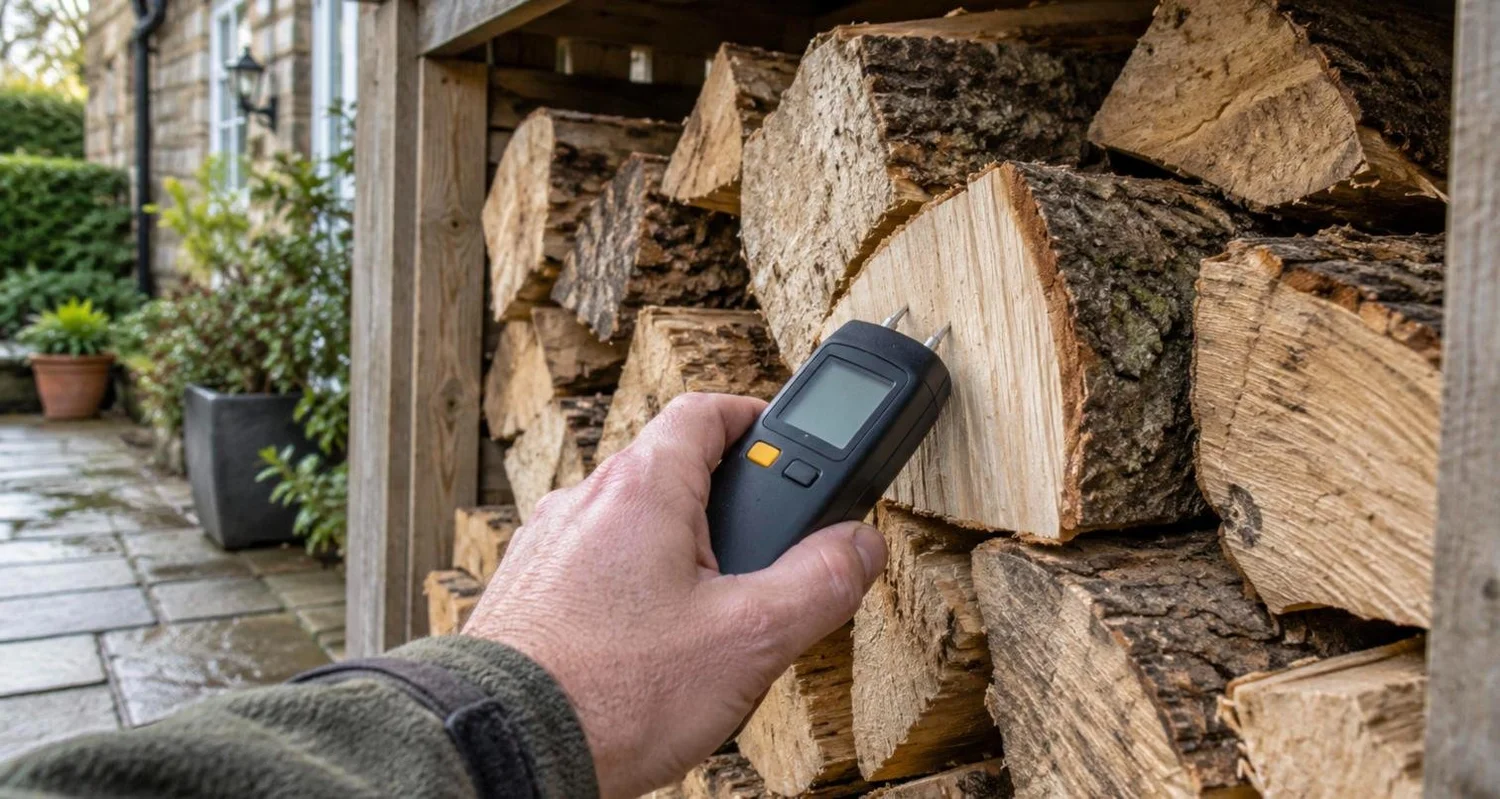
The best wood for a log burner is dry hardwood, such as ash, oak, beech or birch, with a moisture content under 20%. Dryness matters more than the type of tree. Kiln dried logs are ready to burn straight away and are worth paying for if you cannot store and season logs yourself. Avoid wet wood, pallets, treated or painted timber, chipboard and driftwood.
Moisture matters more than the type of wood
When people ask us what wood is best for log burners, they usually expect us to name a tree. The honest answer is that how dry the wood is matters far more than what it is. A wet log spends most of its energy boiling off water before it gives you any heat. That steam cools the fire down, the smoke goes up the flue cool and sticky, and it leaves tar behind.
The figure to remember is under 20% moisture. Freshly cut wood can be well over double that. Below 20%, wood lights easily, burns with bright flames and leaves far less soot in the chimney.
In England, wood sold in smaller amounts (under 2m³) generally has to be certified as Ready to Burn, which means it has been tested at 20% moisture or less. You will usually see the Ready to Burn logo, often run through the Woodsure scheme, on bags, nets and crates. Larger loads are not covered in the same way, so if you are buying a bulk delivery, ask the supplier about moisture and check it yourself when it arrives.
Hardwood or softwood?
Hardwoods come from broadleaf trees and are usually denser, so a log holds more fuel for its size. They burn slower and longer and give a good bed of embers. Softwoods come from conifers. They are lighter, catch easily and burn hot and fast, but you will be filling the stove up a lot more often and they tend to spit.
Neither is wrong. Plenty of people use dry softwood to get the stove going and hardwood to keep it going. The main thing is that whatever you burn is properly dry.
Good wood for wood burning stoves
| Wood type | Burn quality | Seasoning time | Notes |
|---|---|---|---|
| Ash | Excellent | Around 1 year | Lower moisture than most when freshly cut. Splits easily and burns steadily |
| Oak | Excellent once dry | 2 years or more | Dense and slow burning with long-lasting embers. Burns poorly if not fully seasoned |
| Beech | Excellent | 1 to 2 years | Burns hot and clean once dry. Needs proper seasoning |
| Birch | Very good | Around 1 year | Lights easily and burns bright but quicker than oak. Bark is great for kindling |
| Hawthorn | Very good | 1 to 2 years | Dense, burns hot and slow. Watch the thorns when handling |
| Cherry | Good | Around 1 year | Burns slowly with a pleasant smell. Good mixed with other hardwoods |
| Pine and spruce | Fair | 6 months to 1 year | Burns fast and hot, spits and leaves more resin. Best for kindling |
| Wet or green wood of any kind | Poor | Not ready | Hisses, smokes and blackens the glass. Leaves tar in the flue |
Seasoning times are a rough guide only. A log that has been split small and kept in a breezy, covered store will dry far quicker than a big round left in a pile on the ground. Always go by the moisture meter, not the calendar.
Woods you should never burn in a log burner
- Wet or green wood. Freshly cut or rain-soaked logs smoke, burn cool and coat the flue in tar.
- Treated, painted or varnished timber. Fence panels, decking, old furniture and window frames can give off harmful fumes when burnt.
- Pallets. Some are chemically treated, many are full of nails and staples, and you cannot always tell which is which.
- Chipboard, MDF and plywood. They are mostly glue and resin and should never go in a stove.
- Driftwood. It is full of salt, which can corrode the stove and flue and give off fumes.
- Household rubbish and cardboard. Not a fuel. It burns dirty, leaves deposits and can carry burning bits up the chimney.
If you are not sure about a fuel, check your stove manual. Coal and other solid fuels are a separate question, which we cover in can you burn coal in a log burner.
Kiln dried logs vs seasoned logs
There are two ways logs get dry. Seasoned logs, sometimes called air-dried, are split and stacked outside under cover and left to dry naturally over months or years. Kiln dried logs are dried in a heated kiln over a few days, which brings the moisture down quickly and fairly evenly.
| Kiln dried logs | Seasoned (air-dried) logs | |
|---|---|---|
| How they are dried | In a heated kiln, usually over a few days | Stacked under cover outdoors, over months or years |
| Moisture | Usually well under 20% and fairly consistent | Can be under 20%, but varies with the weather and how they were stored |
| Ready to burn on arrival | Yes, if stored dry | Only if properly seasoned. Some sold as seasoned are not dry enough |
| Cost | Usually more per load | Usually cheaper, especially in bulk |
| Storage needed | Less. You can buy as you go | More. Best bought ahead and kept in a log store |
| Best for | Small stores, occasional use, or anyone who wants no guesswork | People with space who can buy ahead and plan a season in advance |
When kiln dried logs are worth paying for
- You have nowhere to season logs. A flat, a small garden or no log store means you need wood that is dry when it turns up.
- You only use the stove now and then. Buying a few bags or a small crate of kiln dried logs saves tying up space and money in a big load.
- You have had problems with damp logs before. Black glass, a smoky start or a tarry flue are often down to logs that were sold as seasoned but were not.
- It is mid-winter and you have run out. Fresh or part-seasoned logs bought now will not be ready this year.
If you have the space, the cheapest option over time is usually to buy hardwood a year or two ahead and season it yourself. Either way, test it. Kiln dried logs can pick up moisture again if they are left uncovered or stored somewhere damp.
How to test your logs with a moisture meter
A basic moisture meter is cheap and one of the most useful things you can own if you have a log burner. The trick is testing the right place. The outside of a log dries first, so it will always read lower than the middle.
- Pick a log from the middle of the pile, not one from the top that has been in the sun.
- Split it in half with an axe or splitting maul.
- Push the pins into the fresh face straight away, across the grain, in the middle of the log.
- Take two or three readings from different logs and go by the highest.
- Under 20% is ready. Over that, give it more time in the store.
Without a meter, dry logs are lighter than they look, often have cracks running out from the centre on the ends, sound hollow when you knock two together and the bark comes away easily. These are useful hints, but a meter is the only way to be sure.
How to check a log delivery
Whether it is a bulk bag or a full trailer load, take five minutes to check it before the driver goes or before you stack it all away.
Look for the label
On smaller amounts, check for the Ready to Burn logo or certificate number on the bag, net or delivery note.
Check the mix
Make sure it is the wood you paid for. A hardwood load should not be mostly pine or spruce.
Pick logs from different places
Take a few from the top, middle and bottom of the bag or pile. The bottom is often the dampest.
Split and test
Split each one and test the fresh inside face with a moisture meter, as above.
Check the size
Logs should fit your stove with room to spare, and be split small enough to burn well. Big rounds take much longer to dry.
Raise it straight away
If readings are over 20%, tell the supplier while it is fresh. Do not just stack it and hope.
How to store logs so they stay dry
Good storage is what turns a cheap load of logs into good fuel. Wood dries with air moving through it, so a log store needs to keep the rain off without shutting the wind out.
- Keep it off the ground. Use a slatted base, pallets or bearers so damp does not wick up from below.
- Cover the top. A roof or lid keeps the rain off. Do not wrap the whole stack in a tarp, which traps moisture.
- Leave the sides open. Slatted or open sides let the wind dry the wood.
- Split before you stack. Split logs dry much faster than whole rounds.
- Stack loosely, bark up. Leave small gaps for air and stand the store in a sunny, breezy spot if you can, not against a damp wall.
- Give hardwood time. Plan on one to two years for most hardwoods, and longer for oak. Use the oldest logs first.
- Bring a day or two's worth inside. A basket by the stove takes the chill off the logs before they go in.
What wet wood does to your stove and chimney
Burning damp logs is not just a waste of money. A cool, smoky fire sends moisture and unburnt gases up the flue, where they condense and stick to the inside as soot and creosote. Over time that turns into a hard, shiny tar. It is the same stuff that blackens the glass on your stove door, and if the flue gets hot enough, it can catch fire.
- Black glass. Glass that goes black after every fire is often the first sign of damp logs. See how to clean log burner glass.
- Tar and creosote in the flue. It narrows the flue, hurts the draw and can run back down as brown, smelly stains.
- Chimney fires. Built-up creosote is the fuel for most chimney fires. Our guide to chimney fire signs explains what to look out for.
- A stove that is hard to light and hard to keep going. Damp wood smoulders rather than burns, however well you build the fire.
Smelling tar or seeing brown stains on the chimney breast? That can mean creosote has built up in the flue. Stop using the stove and get the chimney swept and checked before you light it again.
Getting the most from good wood
Dry logs do most of the work, but how you light and run the stove matters too. Light it hot and fast with plenty of air, using the top-down method in our guide to how to light a log burner, and avoid shutting the air right down to slumber it overnight.
Even with the best wood, the flue still needs sweeping. We recommend at least once a year, and more often if you use the stove most evenings through the winter. You can book a sweep through our chimney services, and a yearly stove service keeps the door seals, baffles and air controls working as they should.
Common questions
What is the best wood for a log burner?
Dry hardwood. Ash, oak, beech, birch, hawthorn and cherry are all good choices, as long as the moisture content is under 20%. A well-seasoned log of almost any hardwood will burn better than a damp log of the best species, so check the moisture before you worry about the type.
Are kiln dried logs worth it?
They are worth it if you have nowhere to store and season logs yourself, if you want logs you can burn the day they arrive, or if you are buying in small amounts. If you have space for a log store and can plan a year or two ahead, buying seasoned or fresh hardwood and drying it yourself usually works out cheaper.
Can I burn softwood in my log burner?
Yes, as long as it is dry. Pine, spruce and other softwoods burn hot and fast and tend to spit, so you get through a lot more of it. Most people use softwood for kindling and to get the fire going, then switch to hardwood.
How long does wood need to season before burning?
It depends on the wood, how it is split and how it is stored. As a rough guide, most hardwoods need one to two years in a good log store, and oak can take longer. Softwoods dry quicker. The only way to know for sure is to test a freshly split face with a moisture meter.
Why should I not burn pallets or old timber in my stove?
Pallets and building timber are often treated, painted, glued or full of nails, and some pallets are chemically treated. Burning them can give off harmful fumes, leave heavy deposits in the flue and damage the stove. Chipboard, MDF and plywood are full of glue and should never go in a log burner.
Related guides
Can you burn coal in a log burner?
What is safe and legal to burn.
How to clean log burner glass
And how to stop it going black.
Chimney fire warning signs
What to look for and what to do.
Book a sweep in your area
Book your chimney sweep
Sweep Sisters provides HETAS certified chimney sweeping and stove servicing across Essex and Hertfordshire, with a sweep certificate after every visit.