
Multi Fuel Stove vs Wood Burner: What's the Difference?
We get asked this one a lot on sweeps around Essex and Hertfordshire, usually by someone who has just moved in and found a stove in the lounge. A multi fuel stove and a wood burner look almost the same from the front, but they are built differently and need using differently. Here is how to tell them apart and get the best from each.
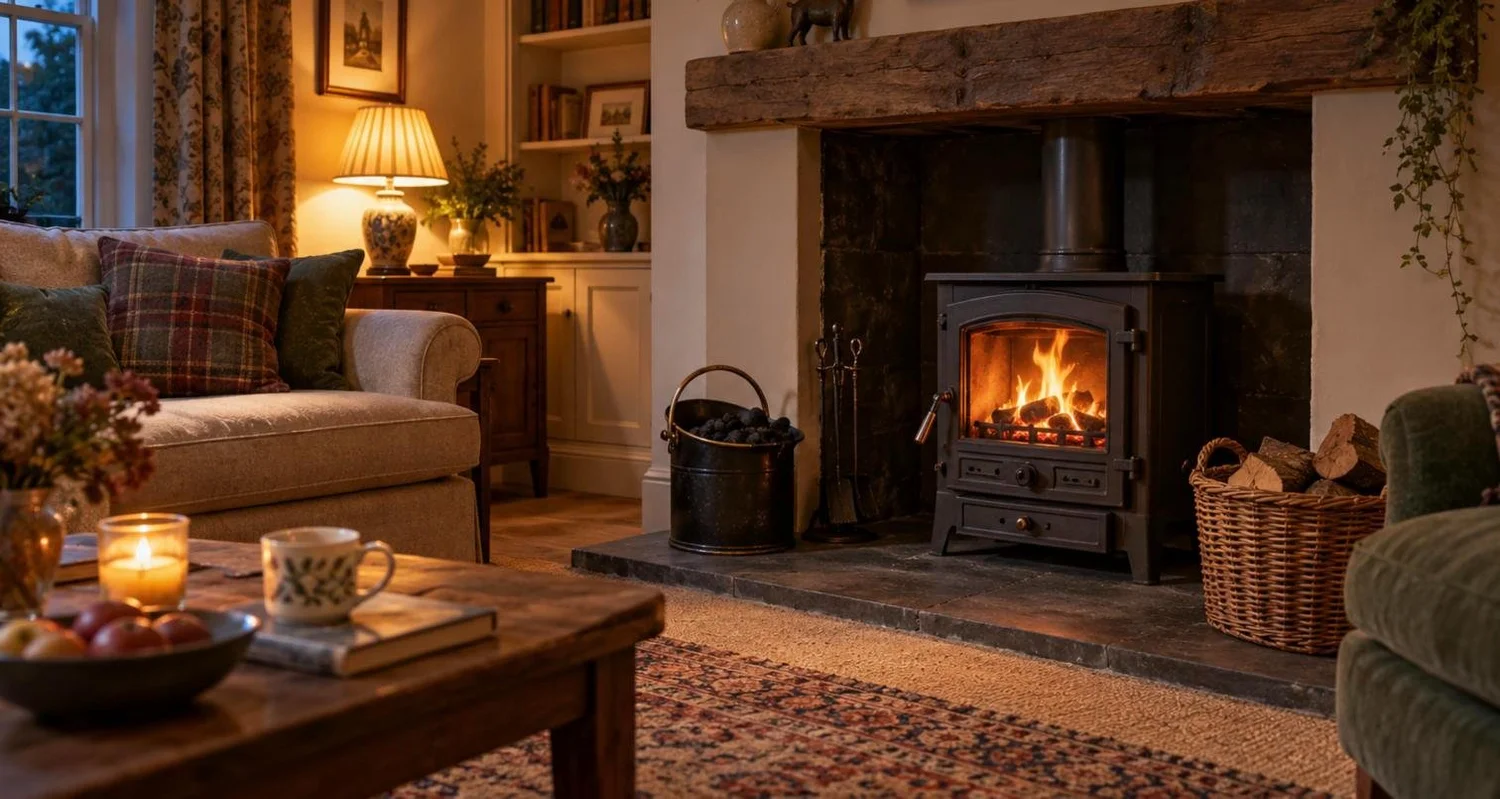
A multi fuel stove has a riddling grate and ash pan, so it can burn wood and approved smokeless fuels. A wood burner has a flat base and only burns logs, which sit on a bed of ash. Wood burns best on ash with air from above, while smokeless fuel needs air from below through the grate. Check the firebox floor, the manual or the data plate to see which one you have.
What is a multi fuel stove?
A multi fuel stove is a stove built to burn more than one type of solid fuel. In practice that means logs plus approved smokeless fuels, such as manufactured smokeless briquettes or ovoids. Some will also take anthracite. You will also hear them called multifuel burners or dual fuel wood burning stoves. What makes it multi fuel is the bottom of the firebox.
- A riddling grate. A cast iron grate sits in the bottom of the firebox, with gaps that let ash drop through and air come up.
- An ash pan underneath the grate that you empty regularly.
- A riddler. A lever, rod or handle that shakes the grate so the ash falls through. Some you work with a separate tool.
- Primary air from below. An air control, often low down on the front or the ash pan door, that feeds air up through the grate.
- Secondary or airwash air from above, which feeds the flames and keeps the glass clean.
The reason for all of this is simple. Wood and smokeless fuel want different things. Wood burns best sitting on a bed of its own ash with air coming in from above. Smokeless fuel needs air pulled up from underneath, through the grate, or it smothers itself and goes out. A multi fuel stove lets you set it up either way.
What is a wood burner?
A wood burner, or wood-only stove, is built just for logs. The floor of the firebox is flat, usually with firebricks or a solid base, and there is no grate to riddle. The logs sit on a bed of ash and the air comes in from above and behind, through the secondary and airwash vents.
Because the whole stove is designed around one fuel, a good wood burner can be very clean and efficient on logs. Many have a fixed bed of ash that you only clear down when it gets too deep, rather than emptying a pan every day. You cannot burn smokeless fuel or coal in one, as there is no way to get air under it.
How to tell which one you have
Lots of people move into a house with a stove already fitted and have no idea what it is. Here is how we check on a visit.
- Look at the floor of the firebox. Once the stove is cold and the ash has been cleared, check for a grate with gaps in it. A grate usually means multi fuel. A flat, solid floor means wood only.
- Look for an ash pan. If there is a pan or drawer under the grate, it is almost certainly multi fuel.
- Look for a riddling lever or a slot for a riddling tool, often at the front or side near the bottom.
- Find the manual. Search online for the make and model if you do not have a paper copy. It will list the fuels the stove is approved for.
- Check the data plate. Most stoves have a small metal plate on the back, side or underneath, giving the make, model and often the fuel type.
Some wood burners can be converted to multi fuel with a conversion kit from the manufacturer, and the other way round. Do not just drop a grate into a wood-only stove, though. Only use the parts the manufacturer makes for that model.
Multi fuel stove vs wood burner at a glance
| Feature | Multi fuel stove | Wood burner |
|---|---|---|
| Fuels | Logs and approved smokeless fuels | Logs only |
| Firebox floor | Riddling grate with an ash pan underneath | Flat base, fire sits on a bed of ash |
| Air supply | Primary air from below plus secondary air from above | Mainly secondary and airwash air from above |
| Ash | Riddle and empty the pan regularly, especially on smokeless fuel | Leave a bed of ash and clear it down when it gets too deep |
| Burning wood | Works well with the grate air closed and ash left in | What it is designed for, often very clean on logs |
| Burn time | Smokeless fuel can give long, steady burns | Needs logs adding more often |
| Extra parts to wear | Grate, riddler and ash pan, plus seals, bricks and baffle | Seals, firebricks and baffle |
| Best for | People who want the choice of fuel | People who will only ever burn logs |
Pros and cons of a multi fuel stove
- Pro: choice of fuel. If logs are scarce or expensive one winter, you can switch to smokeless fuel.
- Pro: longer burns. Smokeless fuel burns slowly and steadily, which some people like for cold evenings.
- Pro: works well with dual fuel use. Plenty of our customers light with kindling and logs and then add smokeless fuel once the fire is going, where the manual allows it.
- Con: more to look after. The ash pan needs emptying and the grate needs riddling. Grates do wear and crack over time.
- Con: easy to get wood wrong. Leaving the grate air wide open on logs makes them burn fast and hot, so you go through wood quickly.
Pros and cons of a wood burner
- Pro: simple to use. No riddling and no ash pan. You just keep a bed of ash and feed it logs.
- Pro: often cleaner on wood. The firebox and air flow are designed for one fuel, so many burn logs very efficiently.
- Pro: fewer parts to wear. No grate to crack or riddler to seize.
- Con: logs only. If you cannot get dry wood, you cannot use the stove.
- Con: more refuelling. Logs burn quicker than smokeless fuel, so you will be topping up more often.
How to use a multi fuel stove with each fuel
The biggest mistake we see is people burning logs and smokeless fuel exactly the same way. Set the stove up for the fuel you are using.
Burning wood: leave a bed of ash
Do not empty the grate before a wood fire. Leave a layer of ash on it, around an inch is plenty. Logs burn best sitting on ash.
Burning wood: close the bottom air
Shut the primary air that comes up through the grate once the fire is going. Run the stove on the secondary and airwash air from above.
Burning wood: use dry logs
Burn seasoned or kiln dried logs under 20% moisture. Our guide to the best wood for a log burner covers which species burn best.
Smokeless fuel: riddle and empty
Riddle the grate so the old ash drops through and empty the ash pan. Smokeless fuel needs a clear grate so air can get to it.
Smokeless fuel: open the bottom air
Open the primary air so it feeds up through the grate. Start the fire with kindling and a few small logs, then add smokeless fuel on top once it is burning well.
Smokeless fuel: keep the pan clear
Empty the ash pan before it fills up to the grate. A full pan stops air getting through and can overheat and warp the grate bars.
If you are not sure how to get the fire going in the first place, see our guide on how to light a log burner.
What fuels can you burn?
Only burn the fuels listed in your stove manual. As a general rule:
- Wood-only stove: dry, seasoned or kiln dried logs. Look for the Ready to Burn label when buying.
- Multi fuel stove: dry logs, plus approved smokeless fuels that the manufacturer says are suitable.
- Never burn: household rubbish, painted or treated timber, pallets, chipboard, plastic or wet wood.
The rules have also changed. In England, traditional house coal and wet wood sold in small quantities can no longer be sold for burning at home, so most people with a multi fuel stove now burn approved smokeless fuel instead. The details depend on what you buy and where, so our guide can you burn coal in a log burner? goes through it properly.
Never put coal or smokeless fuel in a wood-only stove. With no grate underneath, the fuel cannot get air from below. It can burn very hot in one spot, damage the firebricks, baffle and stove body, and may void the warranty.
Smoke control areas and smoke exempt stoves
Many towns, including parts of Essex and Hertfordshire, are covered by smoke control areas. In a smoke control area there are limits on what you can burn and how much smoke your chimney can give off. Generally you either need to burn an authorised smokeless fuel, or use a stove that has been approved as exempt, often called a Defra exempt or smoke exempt appliance.
An exempt stove has been tested to burn wood, and sometimes other fuels, without giving off too much smoke. It is the stove that is exempt, not the fuel, and it only counts if you use it the way the manufacturer says. Rules and enforcement can differ between councils, so check with your local council whether your address is in a smoke control area and what that means for your stove.
What about Ecodesign stoves?
Ecodesign is a standard for how much smoke and particulates a stove gives off and how efficiently it burns. New stoves sold in Great Britain now have to meet it, so if your stove has been fitted in the last few years it is likely to be Ecodesign ready. Both multi fuel stoves and wood burners can be Ecodesign approved. If you are replacing an old stove, it is worth asking about this, and checking whether the new one is also exempt if you live in a smoke control area.
How often to sweep each type
With multi fuel and wood burning stoves, it is the fuel that decides how often the chimney needs sweeping, not the stove. These are general guidelines from industry bodies like HETAS and NACS. Your own chimney may need more, depending on how much you burn and how dry your logs are.
| What you burn | How often to sweep |
|---|---|
| Smokeless fuel | At least once a year |
| Wood | Ideally more often while in use, for heavy use around every three months |
| A mix of wood and smokeless fuel | At least once a year, more often if you burn a lot of wood |
| Stove not used for a while | Sweep and check before lighting it again |
Wood leaves more tar and soot in the flue than smokeless fuel, especially if the logs are not fully dry. Our chimney services page has the details and prices, and every sweep comes with a certificate.
Servicing a multi fuel stove or wood burner
A sweep clears the flue. A service looks after the stove itself. On a stove service we check:
- Rope seals on the door and glass. A worn seal lets air leak in, so the stove burns too fast and is hard to control.
- Firebricks. Cracks are normal over time, but bricks that are broken through or crumbling need replacing.
- The baffle or throat plate. It sits at the top of the firebox, collects soot and can warp or crack.
- The grate and riddler on a multi fuel stove. Bars can crack or warp, especially if the ash pan has been left to fill up.
- Air controls, hinges, door catch and glass, to make sure everything opens, shuts and seals as it should.
Which should you choose?
If you have a good supply of dry logs and you are happy burning wood only, a wood burner is the simpler option and is often the cleaner one on logs. If you want the flexibility to burn smokeless fuel, or you like the idea of long, slow burns on cold nights, a multi fuel stove gives you that choice. Either way, check whether you are in a smoke control area before you buy, and get it fitted by a HETAS registered installer.
Already got a stove and not sure what it is, or whether it is set up right? We are always happy to take a look when we come out to sweep.
Common questions
Can you burn wood in a multi fuel stove?
Yes. Most multi fuel stoves burn wood well. The trick is to close the air coming up through the grate and leave a bed of ash in the firebox, because wood likes to burn on ash with air coming from above. Check your stove manual, as a few models have their own instructions.
Can you burn coal in a wood burner?
No, not in a wood-only stove. A wood burner has a flat base with no grate underneath, so smokeless fuel cannot get the air it needs from below. It burns badly, gets very hot in the wrong places and can damage the stove. Only burn coal or smokeless fuel in a stove built and approved for it.
How do I know if my stove is multi fuel?
Look inside the firebox. A multi fuel stove has a metal grate in the bottom with an ash pan underneath, and usually a riddling lever or handle to shake the ash through. A wood-only stove has a flat floor. The manual or the data plate on the back or underside of the stove will also tell you which fuels it is approved for.
Is a multi fuel stove or a wood burner better?
Neither is better for everyone. A wood burner is usually the simpler choice if you will only ever burn logs, and many are designed to burn wood very cleanly. A multi fuel stove suits you if you want the option of smokeless fuel, for example for longer, steadier burns on cold nights or if logs are hard to get.
How often should a multi fuel stove be swept?
At least once a year if you mainly burn smokeless fuel. If you burn a lot of wood, sweep more often while the stove is in heavy use. For a stove running most days through the winter, we often recommend sweeping every three months or so while it is in use.
Related guides
Can you burn coal in a log burner?
What is safe and legal to burn.
How to light a log burner
The top-down method, step by step.
How often and how long?
How often to sweep and how long it takes.
Book a sweep in your area
Book your chimney sweep
Sweep Sisters provides HETAS certified chimney sweeping and stove servicing across Essex and Hertfordshire, for multi fuel stoves and wood burners alike.