
Chimney Fire: Warning Signs, Causes and What to Do
A chimney fire can start with no warning on an ordinary winter evening. As HETAS certified sweeps working across Essex and Hertfordshire, we see the aftermath more than we would like. Here is how to spot the signs, what to do if it happens and how to stop it happening in the first place.
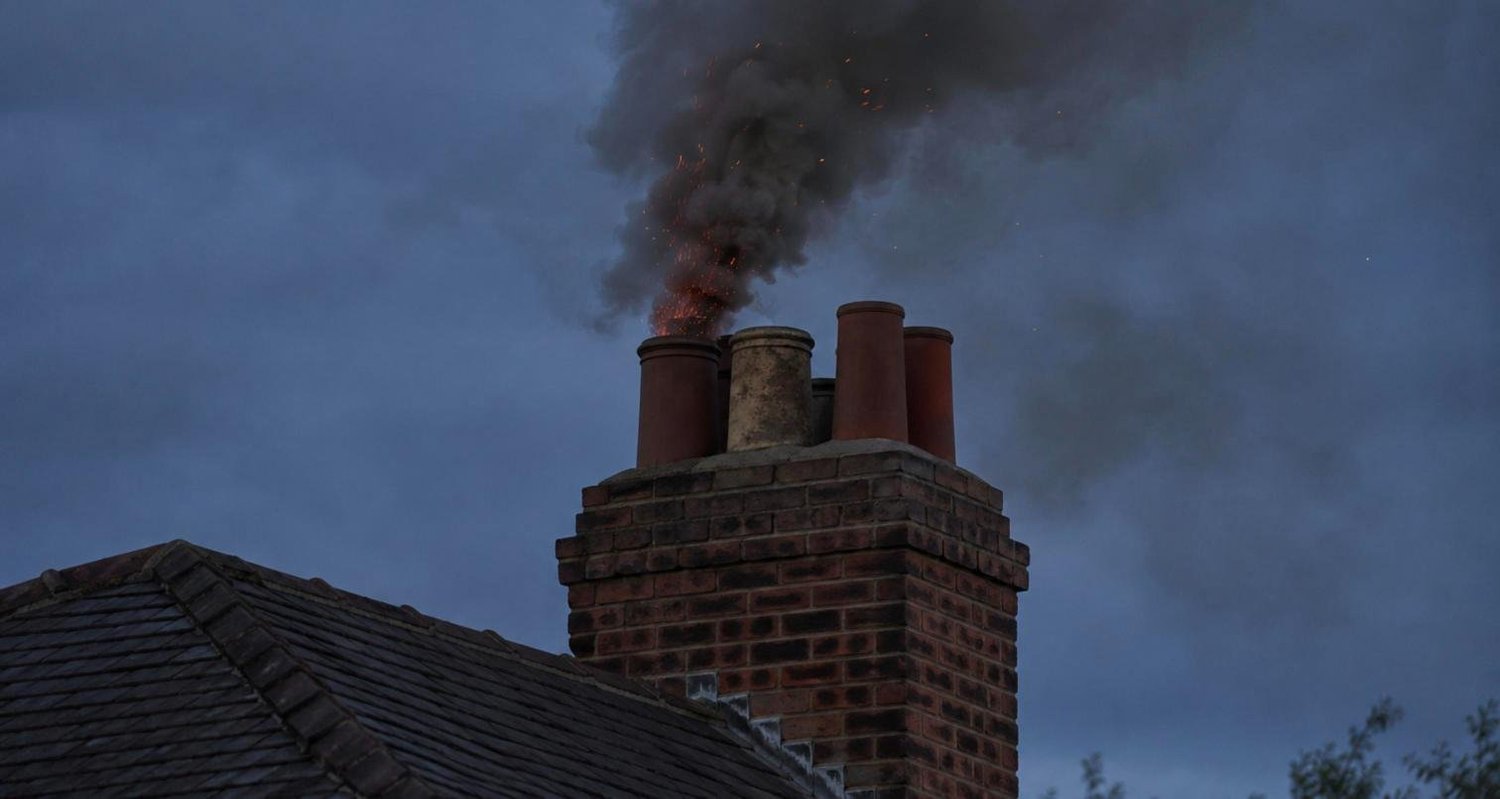
A chimney fire is when the soot and tar-like creosote lining your flue catches fire. The main warning signs are a loud roaring noise, thick smoke or flames from the chimney pot and a very hot chimney breast. If you think you have a chimney fire, call 999, close the stove door and air vents, get everyone out and do not use the fire again until it has been inspected.
What is a chimney fire?
Every time you burn wood or solid fuel, smoke cools as it travels up the flue and leaves a layer of soot and creosote on the inside. Creosote starts as a dry, sooty deposit, but on a cool or smoky fire it turns sticky and then into a hard, shiny tar. All of it burns. When the flue gets hot enough, or a spark catches it, that layer lights and the chimney itself becomes the fire.
Chimney fires can reach over 1,000°C inside the flue. That is far hotter than a flue is built to cope with day to day, which is why even a short one can crack brickwork, liners and pots. Fire and rescue services in England are called to thousands of chimney fires every year, and most of them could have been avoided with a sweep and dry logs.
Chimney fire signs to look and listen for
A fast-burning chimney fire is hard to miss. These are the signs people usually tell us about afterwards.
- A loud roaring or rumbling noise from the chimney. People often say it sounds like a train or a low-flying plane.
- Thick, dense smoke pouring out of the chimney pot, or smoke coming back into the room.
- Flames or sparks shooting out of the top of the chimney, sometimes landing on the roof or garden.
- A hot chimney breast. The wall around the stove or fireplace, or the breast in the room above, is too hot to keep your hand on.
- A strong, hot, tarry smell that is different from your normal fire smell.
- The stove roaring out of control even with the air controls shut down.
What each sign is telling you
| Warning sign | What it means |
|---|---|
| Roaring or rumbling noise | Creosote in the flue has caught and is burning hard. The draw is pulling in air fast, which feeds the fire |
| Dense smoke from the pot | Deposits are burning off inside the flue faster than the chimney can clear them |
| Flames or sparks from the top | The fire has reached the top of the flue. Burning debris can land on the roof, thatch or nearby buildings |
| Hot chimney breast | Heat is coming through the brickwork. Furniture or timber against the breast could catch |
| Smoke in other rooms or the loft | The flue may already be cracked and leaking smoke and carbon monoxide |
| Strong tarry smell | Tar-like creosote is burning. This is the stage that burns hottest |
| Puffy, flaky deposits after a fire | You have probably had a slow chimney fire you did not notice |
Slow-burning chimney fires you might not notice
Not every chimney fire roars. Some smoulder quietly when there is not much air or not much fuel, and the first anyone knows about it is when we find the damage on the next sweep. They still get hot enough to crack a flue. After a fire like this you might see:
- Puffy, honeycomb-like creosote. Burnt creosote swells up and looks like flaky, grey-black popcorn. You may find bits of it in the stove, the grate or on the roof.
- Cracked or crumbling flue, missing mortar, or cracks in the chimney stack you can see from outside.
- A damaged cowl or pot. Warped metal, discolouring or a cracked pot at the top of the chimney.
- Smoke or smells in odd places, such as a bedroom next to the chimney breast or the loft.
- Warped metal parts on the stove, flue pipe or register plate.
If you spot any of these, stop using the fire and get it checked. A cracked flue can let carbon monoxide into the house without any obvious warning, so a working CO alarm in the room is a must.
What to do if you have a chimney fire
Stay calm and work through these in order. Your safety and your family's comes before the house.
Call 999
Ask for the fire and rescue service and tell them you have a chimney fire. Do it straight away, even if the fire seems to be dying down.
Shut the air down
If you have a stove, close the door and shut all the air vents. Cutting off the air slows the fire. On an open fire, close the damper or fit the fireguard if you safely can.
Get everyone out
Get everyone, including pets, out of the house and wait somewhere safe for the fire service. Do not go back in.
Do not use water on the stove
Never throw water into a hot stove or fireplace. The steam can scald you and the shock can crack the stove, glass or flue.
Move things away if it is safe
Only if you can do it quickly and safely before you leave, move furniture, rugs and anything that could burn away from the chimney breast, including in the room above.
Do not relight it
After the fire is out, do not light the stove or fire again until the chimney has been swept and inspected by a professional.
Do not go up on the roof or into the loft to check. Leave the chimney to the fire service. Smoke, heat and falling debris make both places dangerous, and the fire can spread into roof timbers without you seeing it.
What causes a chimney fire?
Almost every chimney fire comes down to a build-up of soot and creosote, plus something that heats it up. These are the causes we see most often in homes across Essex and Hertfordshire.
- Wet or unseasoned wood. Logs with too much moisture burn cool and smoky, and that smoke leaves tar in the flue. It is the biggest single cause.
- Slumbering the stove overnight. Shutting the air right down to keep it in until morning makes the fire smoulder, and the flue fills with creosote fast.
- Not sweeping often enough. A flue that has gone two or three winters without a sweep has a lot of fuel sitting in it.
- Burning the wrong fuel. Household rubbish, treated or painted timber, cardboard and the wrong type of coal all leave heavy deposits. Some fuels are not legal to burn in a stove at all.
- A damaged or unlined flue. Old chimneys with cracks, gaps in the mortar or no liner let deposits collect and let heat reach timbers in the walls.
- Birds' nests and debris. A blocked flue draws badly, the fire burns cooler and anything stuck in the chimney can catch.
How to prevent a chimney fire
- Sweep at least once a year. If you burn wood most evenings through the winter, sweep more often. Our chimney services page has the details and prices.
- Burn seasoned wood under 20% moisture. Buy logs with the Ready to Burn label or check your own with a moisture meter. Split a log and test the fresh face, not the outside.
- Burn hot, not slow. Get the fire going quickly and keep a lively flame. Our guide on how to light a log burner shows the top-down method that gets the flue hot fast.
- Do not slumber the stove overnight. Let it burn down and relight it in the morning.
- Only burn the fuel your stove is made for. Check the manual and never burn rubbish or treated wood.
- Fit a CO alarm and smoke alarms and test them regularly.
- Book a CCTV inspection after any chimney fire. A camera survey shows whether the flue, liner or pot has cracked, which you cannot see from the fireplace.
Chimney fires and your home insurance
Many home insurers expect you to keep your chimney in good order, and some may ask for proof of regular sweeping, such as a sweep certificate, if you make a claim after a chimney fire. Policies vary, so check your own wording or ask your insurer. Every sweep we carry out comes with a certificate you can keep with your house paperwork.
After a chimney fire
Once the fire service has left, the chimney needs a proper sweep to clear the burnt deposits, then a CCTV inspection and a smoke test to check the flue is still sound. If the liner or flue has been damaged it will need repairing before you use the fire again. We can do the sweep, camera survey and smoke test in one visit and talk you through what we find.
Common questions
What are the signs of a chimney fire?
The usual signs are a loud roaring or rumbling from the chimney, thick smoke pouring from the pot or back into the room, flames or sparks coming out of the top of the chimney, a chimney breast that is too hot to touch and a strong, hot tarry smell. If you notice any of these, call 999.
Can a chimney fire go out on its own?
Some do, especially slow-burning ones that run out of fuel. That does not mean it is safe. Even a short fire can crack the flue or liner and leave heat in the brickwork, so call 999 and do not use the fire again until the chimney has been inspected.
Should I put water on a chimney fire?
No. Do not throw water into a hot stove or fireplace. The sudden steam can scald you and the shock can crack the stove, the glass or the flue. Close the air vents and the stove door to starve the fire of air, get everyone out and call 999.
How do I know if I have had a chimney fire?
Look for puffy, flaky creosote that looks like honeycomb or popcorn in the fireplace or on the roof, cracked or crumbling mortar, a damaged or discoloured cowl or pot, warped metal parts and new smoke or smells in rooms next to the chimney. A CCTV inspection will confirm it.
How often should I sweep my chimney to prevent a chimney fire?
At least once a year for most stoves and open fires. If you burn wood regularly through the winter, we recommend sweeping more often, up to once a quarter for heavy use. Regular sweeping removes the soot and tar that a chimney fire feeds on.
Related guides
What is creosote?
The deposit that fuels chimney fires.
CCTV chimney inspections
How a camera survey checks for fire damage.
How often should you sweep?
Sweeping frequency by fuel and use.
Book a sweep in your area
Book your chimney sweep
Sweep Sisters provides HETAS certified chimney sweeping, CCTV inspections and smoke tests across Essex and Hertfordshire, with a sweep certificate after every visit.