
How to Clean Log Burner Glass (and Stop It Going Black)
How to Clean Log Burner Glass (and Stop It Going Black)
Black, sooty glass is the most common log burner complaint we hear in homes across Essex and Hertfordshire. The good news is that it usually cleans up in minutes with things you already have, and once you know why it happens you can stop it coming back.
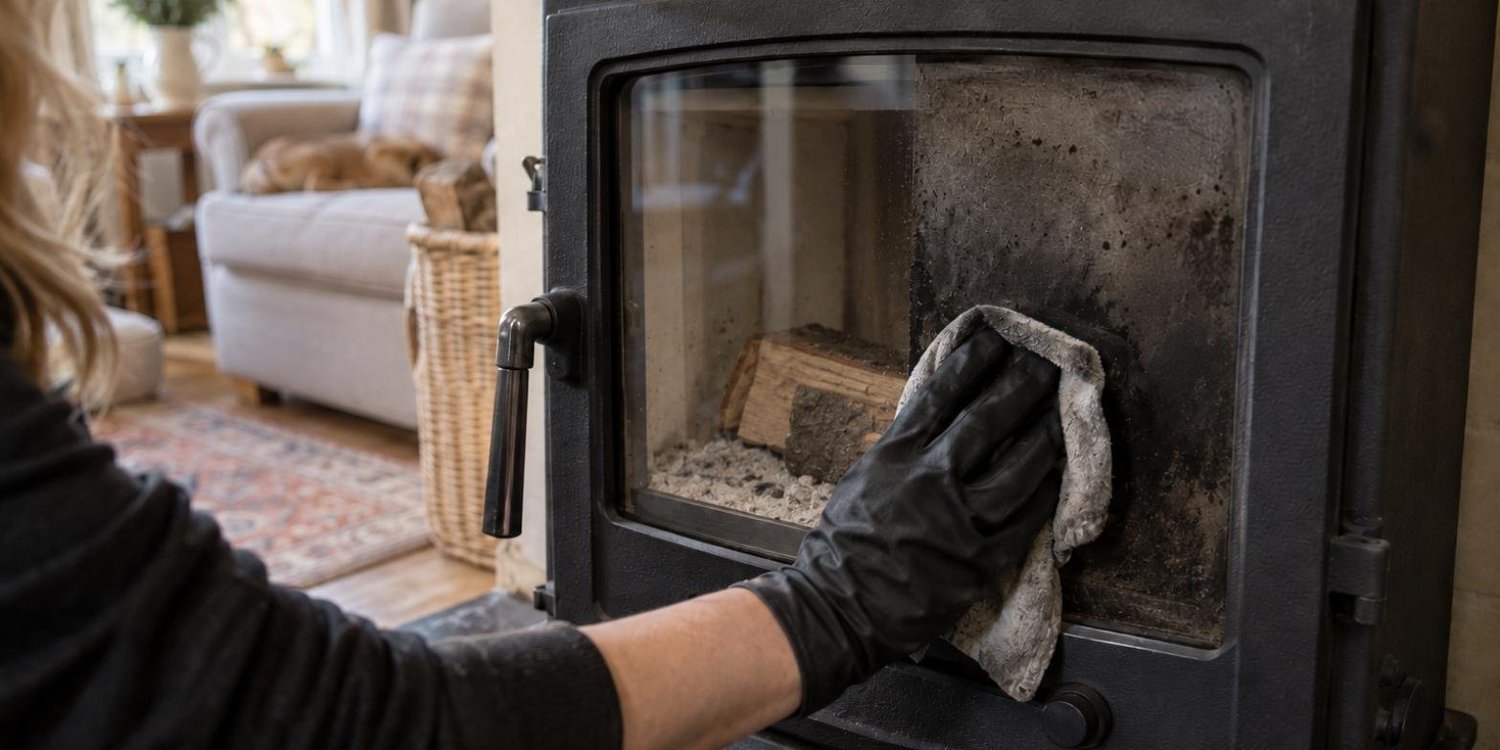
To clean log burner glass, wait until the stove is completely cold, dip a damp sheet of newspaper or kitchen roll in the fine ash from the stove and rub the glass in small circles. Wipe away the residue with a clean damp sheet and buff dry. For stubborn tar, use a stove glass cleaner sprayed onto a cloth, never a scourer or oven cleaner.
Before you start
Ten minutes and a few things you already have at home is all it takes. The most important rule is the first one.
- Let the stove go completely cold. Never clean hot or warm glass. It can crack, and you can burn yourself.
- Newspaper or kitchen roll, a small bowl of water and a dry cloth for buffing.
- Fine white ash from the bottom of the stove. It is mildly abrasive and lifts soot surprisingly well.
- A stove glass cleaner for stubborn tar, made for ceramic stove glass.
- Old towel or dust sheet under the door to catch drips and ash.
How to clean log burner glass: the ash method
This is the method most sweeps use at home. It costs nothing and works on everyday soot.
Open the door and lay a sheet
Put a towel under the door and open it fully so you can reach the whole glass without pressing on the hinges.
Dampen the paper
Scrunch a sheet of newspaper or kitchen roll, dip it in water and squeeze out the excess. It should be damp, not dripping.
Dip it in ash
Press the damp paper into the fine white ash so it picks up a thin grey paste.
Rub in small circles
Work across the glass in small circles. Most soot comes away in a minute or two. Add more ash as you go.
Wipe off the residue
Use a clean damp sheet to wipe away the grey film, working from the top down.
Buff dry
Finish with dry paper or a microfibre cloth until the glass is clear. Close the door once it is fully dry.
For stubborn, tarry glass
Brown or black tar that will not shift with ash is a sign of creosote. Spray a stove glass cleaner onto a cloth, not directly onto the door, so the liquid does not soak into the rope seal. Leave it for a minute, then wipe and buff. A plastic scraper can help on thick spots. Never use metal scrapers, wire wool, scouring pads or oven cleaner, which can scratch the glass and damage the seals and paint.
Black glass after every fire is a warning sign. It usually means tar is building up in the flue too. Tar-like creosote is what causes most chimney fires, so get the chimney swept and the stove checked rather than just cleaning the glass more often.
Why log burner glass goes black
| Cause | What you will notice | Fix |
|---|---|---|
| Wet or unseasoned logs | Hissing, lots of smoke, brown sticky glass | Burn logs under 20% moisture. Check with a moisture meter |
| Fire burning too cool | Lazy orange flames, glass blackens from the bottom corners | Run the stove hotter, especially for the first 20 minutes |
| Airwash vent closed | Glass blackens across the top | Keep the secondary air open. It sweeps clean air down the glass |
| Slumbering overnight | Thick black tar in the morning | Let the fire burn out rather than shutting the air right down |
| Poor draw or blocked flue | Smoke on lighting, smells, glass blackens fast | Book a sweep and smoke test |
| Worn door rope seal | Glass blackens on one side or edge | Replace the rope seal. We can do this during a service |
How to keep the glass clean for longer
- Burn dry wood only. Look for the Ready to Burn logo or season your own logs for at least a year.
- Light it properly. Our guide to how to light a log burner explains the top-down method that gets the stove hot fast.
- Leave the airwash open. It is the secondary air control on most modern stoves.
- Get the chimney swept at least once a year so the flue draws properly. See our chimney services.
Common questions
What is the best thing to clean log burner glass with?
A damp ball of newspaper or kitchen roll dipped in the fine white ash from your stove works for most soot. For heavier tar, use a stove glass cleaner made for ceramic glass. Always clean the glass when the stove is completely cold.
Why does my log burner glass go black so quickly?
Usually because the wood is too wet, the fire is burning too cool, or the airwash vent is closed. Burn logs under 20% moisture, keep the secondary air open and avoid slumbering the stove on low air.
Can I use oven cleaner on stove glass?
It is best avoided. Oven cleaner and abrasive pads can damage the stove paint, the door seals and coatings on some ceramic glass. Use ash or a product the stove manufacturer recommends.
How often should I clean my log burner glass?
Once a week when you use the stove a lot is plenty. If it is blackening after every fire, the cause needs fixing rather than more cleaning.
Related guides
How to light a log burner
The top-down method, step by step.
What is creosote?
The three stages and how to prevent them.
Get your log burner winter ready
The checks to do before the cold sets in.
Book a sweep in your area
Book your chimney sweep
Sweep Sisters provides HETAS certified chimney sweeping and stove servicing across Essex and Hertfordshire, including door seals and glass checks.